
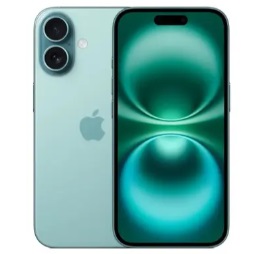


Description
Apple iPhone 16 Detail Specification
LAUNCH | |
| Announced | 2024, September 09 |
| Status | Available |
Build | |
| OS | IOS 18 |
| Dimensions | 147.6 x 71.6 x 7.8 mm |
| Weight | 170 g |
| SIM | eSIM (Nano-SIM) |
| Colors | Black, White, Pink, Teal, Ultramarine |
Frequency | |
| 2G Band | SIM1: GSM 850 / 900 / 1800 / 1900 |
| 3G Band | HSDPA 850 / 900 / 1700(AWS) / 1900 / 2100 |
| 4G Band | LTE |
| 5G Band | SA/NSA/Sub6 |
Processor | |
| CPU | Hexa Core |
| Chipset | Apple A18 (3 nm) |
| GPU | Apple GPU (5-core graphics) |
Display | |
| Technology | Super Retina XDR OLED Touchscreen, Multitouch |
| Size | 6.1 Inches |
| Resolution | 1179 x 2556 Pixels (~461 PPI) |
| Protection | Ceramic Shield glass 2024 gen |
| Extra Features | HDR10, Dolby Vision, 1000 nits (typ), 2000 nits (HBM |
Memory | |
| Built-in | 128/256/512GB Built-in, 8GB RAM, NVMe |
| Card | No |
Camera | |
| Main | Dual Camera: 48 MP, f/1.6, 26mm (wide), 1/1.56", dual pixel PDAF, sensor-shift OIS + 12 MP, f/2.2, 13mm, (ultrawide), dual pixel PDAF, dual-LED dual-tone flash |
| Features | HDR (photo/panorama), Video (4K@24/25/30/60fps, 1080p@25/30/60/120/240fps, HDR, Dolby Vision HDR (up to 60fps), stereo sound rec.) |
| Front | 12 MP, f/1.9, 23mm (wide), 1/3.6", PDAF + SL 3D, (depth/biometrics sensor), HDR, Dolby Vision HDR, 3D (spatial) audio, stereo sound rec, Video (4K@24/25/30/60fps, 1080p@25/30/60/120fps, gyro-EIS) |
Connectivity | |
| WLAN | Wi-Fi 802.11 a/b/g/n/ac/6/7, dual-band, hotspot |
| Bluetooth | v5.3 with A2DP, LE |
| GPS | Yes + A-GPS support, & GLONASS, GALILEO, QZSS |
| USB | USB Type-C 2.0, DisplayPort |
| NFC | Yes |
| Data | GPRS, Edge, 3G HSPA 4G LTE, 5G capable, 5G, EV-DO Rev.A 3.1 Mbps |
Features | |
| Sensors | Accelerometer, Barometer, Compass, Face ID, Gyro, Proximity, Ultra Wideband support (gen2 chip), Emergency SOS, Messages and Find My via satellite |
| Audio | Speaker Phone |
| Browser | Yes |
| Messaging | iMessage, SMS (threaded view), MMS, Email, Push Email |
| Games | Built-in + Downloadable |
| Torch | Yes |
| Extra | IP68 dust/water resistant (up to 6m for 30 min), Apple Pay (Visa, MasterCard, AMEX certified) |
Battery | |
| Capacity | Li-ion Non removable |
| - Fast battery Wired, PD2.0, 50% in 30 min (advertised), 25W wireless (MagSafe), 15W wireless (Qi2), 4.5W reverse wired | |
Price | |
| Price in USD: | $799 |
Specifications
Overview
The Apple iPhone 16 brings a significant performance and usability upgrade to Apple’s standard iPhone lineup. Powered by the A18 chip, it introduces Apple Intelligence support, Camera Control, the Action button, improved cameras and faster MagSafe charging while retaining the compact 6.1-inch form factor.
The iPhone 16 features a 48MP Fusion main camera, 12MP Ultra Wide camera, Super Retina XDR OLED display and storage options ranging from 128GB to 512GB. It also introduces a redesigned vertical camera arrangement that enables spatial photo and video capture.
For buyers who want current-generation Apple features without paying for a Pro model, the iPhone 16 provides a strong balance between performance, camera quality and price.
Design
The iPhone 16 features an aluminium frame, Ceramic Shield front and colour-infused glass back. Apple offers the phone in Black, White, Pink, Teal and Ultramarine.
It measures 147.6 × 71.6 × 7.8 mm and weighs 170 grams, making it slightly lighter than the iPhone 15 while maintaining almost identical overall dimensions.
One of the most visible changes is the vertically arranged rear camera system. Apple moved away from the diagonal camera arrangement used on recent standard iPhones, with the new configuration also enabling spatial photo and video capture.
The traditional Ring/Silent switch has also been replaced by the customizable Action button. A dedicated Camera Control is positioned on the side of the phone for quicker access to photography and camera settings.
The iPhone 16 carries an IP68 water and dust resistance rating and is tested for immersion at a maximum depth of 6 metres for up to 30 minutes under controlled laboratory conditions.
Performance
The iPhone 16 is powered by Apple’s A18 chip, featuring a 6-core CPU with two performance cores and four efficiency cores, a 5-core GPU and a 16-core Neural Engine.
The A18 delivers excellent performance across everyday applications, gaming, photography, video editing and multitasking while improving efficiency compared with previous standard iPhones.
One of the most important advantages of the A18 platform is support for Apple Intelligence.
Apple’s on-device and cloud-assisted AI capabilities provide features designed to assist with writing, image creation, notifications, Siri and other supported applications and experiences.
Storage configurations include 128GB, 256GB and 512GB.
For most users, the 128GB version provides adequate storage, although users who regularly record high-resolution video, download large games or keep extensive photo libraries may prefer 256GB or 512GB.
Camera Experience
The iPhone 16 uses an advanced dual-camera system consisting of a 48MP Fusion main camera and a 12MP Ultra Wide camera.
The 48MP Fusion camera has an f/1.6 aperture and sensor-shift optical image stabilisation. It can capture high-resolution 24MP and 48MP photographs.
The main sensor also enables a 12MP 2x Telephoto option by using the centre portion of the 48MP sensor. This gives users 2x optical-quality zoom without requiring a separate telephoto camera.
The 12MP Ultra Wide camera features an f/2.2 aperture and 120-degree field of view. It also supports macro photography, making the iPhone 16 more versatile for close-up photography.
Apple’s computational photography features include Photonic Engine, Deep Fusion, Smart HDR 5, Night mode, next-generation portraits and Photographic Styles.
Battery Experience
Apple rates the iPhone 16 for up to 22 hours of video playback, improving endurance compared with the previous standard model.
Charging is handled through USB-C.
With a compatible high-powered USB-C adapter, users can fast-charge the battery to approximately 50% in around 30 minutes under suitable conditions.
The iPhone 16 also supports faster MagSafe wireless charging at up to 25W when used with compatible charging equipment.
For typical users, the combination of the efficient A18 processor and improved battery performance should comfortably support a full day of normal smartphone use.
Software
The iPhone 16 originally launched with iOS 18 and is designed to receive Apple’s long-term iOS and security updates.
Software features include Dynamic Island, Face ID, Apple Pay, iCloud integration, Emergency SOS via satellite where supported, Crash Detection, Messages, FaceTime and access to Apple’s App Store ecosystem.
Apple Intelligence
Unlike the standard iPhone 15, the iPhone 16 supports Apple Intelligence.
Apple Intelligence provides supported AI-assisted capabilities across iOS, including enhanced writing features, image-related tools, notification management and deeper Siri integration.
Feature and language availability can vary by region and software version.
Apple Intelligence support also makes the iPhone 16 a more future-ready purchase for users planning to keep their phone for several years.
Who Should Buy
The iPhone 16 is an excellent choice for:
- Users upgrading from an iPhone 12, iPhone 13 or older model
- Buyers who want Apple Intelligence support
- Users who prefer a compact 6.1-inch smartphone
- Buyers who want strong performance without purchasing a Pro model
- Mobile photographers who will benefit from Camera Control and macro photography
- Apple ecosystem users with a Mac, Apple Watch, AirPods or iPad
- Buyers planning to keep their phone for several years
- Users who want faster MagSafe charging
Who Shouldn't Buy
The iPhone 16 may not be ideal for:
- Users who specifically want a 120Hz ProMotion display
- Buyers who need a dedicated long-range telephoto camera
- Users who already own an iPhone 15 and don’t need Apple Intelligence
- Buyers who want extremely fast wired charging
- Users who need expandable storage
- Buyers looking for the least expensive iPhone available
- Professional photographers who would benefit from the additional camera capabilities of a Pro model
Verdict
The Apple iPhone 16 is one of the more meaningful upgrades to Apple’s standard iPhone series.
The A18 processor, Apple Intelligence support, Camera Control, Action button, improved Ultra Wide camera and faster MagSafe charging provide tangible improvements over the iPhone 15.
Camera performance remains excellent, and the 48MP Fusion system provides useful 1x and 2x shooting options without requiring a dedicated telephoto camera.
The biggest weakness remains the 60Hz display. At this price level, many competing smartphones provide 120Hz screens, and Apple’s own Pro models offer noticeably smoother ProMotion displays.
Despite that limitation, the iPhone 16 is an excellent all-round smartphone for users who want modern Apple features without moving to the Pro series.
Our Rating: 4.5/5 ★★★★☆
Apple iPhone 16 Price in USA
The Apple iPhone 16 launched in the United States at $799 for the 128GB model.
The 256GB and 512GB configurations were introduced at higher prices, while actual retail prices can change over time as newer iPhone generations enter the market.
Carrier promotions, trade-in programs and retailer discounts can also significantly reduce the effective purchase price.
Buyers should remember that advertised US prices generally exclude applicable state and local sales taxes.
iPhone 16 USA Launch Price: $799 for 128GB.
Apple iPhone 16 Price in Canada
The Apple iPhone 16 launched in Canada starting at approximately C$1,129 for the 128GB model.
Pricing increases with 256GB and 512GB storage configurations.
Actual Canadian prices may vary depending on retailer discounts, carrier contracts, financing plans and trade-in promotions. Provincial taxes should also be considered when calculating the final purchase cost.
iPhone 16 Canada Launch Price: C$1,129 for 128GB.
Apple iPhone 16 Price in Australia
The Apple iPhone 16 launched in Australia starting at A$1,399 for the 128GB version.
The 256GB and 512GB versions carry higher prices.
Australian retail pricing generally includes GST, although discounts, trade-in offers and carrier promotions can reduce the effective purchase price.
iPhone 16 Australia Launch Price: A$1,399 for 128GB.
Comparison Against Competitors
How the iPhone 16 Compares
The iPhone 16 competes in the premium smartphone segment while sitting below Apple’s Pro models.
Its strongest advantages include the A18 processor, excellent camera system, Apple Intelligence support, strong video recording capabilities, compact design and long-term software support.
Its biggest disadvantage compared with several premium competitors is the continued use of a 60Hz display.
iPhone 16 vs iPhone 15
The iPhone 16 offers several meaningful upgrades over the iPhone 15.
Both phones have similar 6.1-inch OLED displays and 48MP main cameras, but the iPhone 16 introduces the newer A18 chip, Apple Intelligence support, Action button and Camera Control.
The improved Ultra Wide camera also enables macro photography.
Battery performance and MagSafe charging have been improved as well.
For buyers choosing between the two, the iPhone 16 is the more future-ready option, particularly because the standard iPhone 15 does not support Apple Intelligence.
However, the iPhone 15 may still provide better value when available at a significantly lower price.
iPhone 16 vs iPhone 16 Plus
The biggest difference between the iPhone 16 and iPhone 16 Plus is screen and battery size.
The standard iPhone 16 uses a compact 6.1-inch display, while the iPhone 16 Plus provides a larger 6.7-inch screen.
Both use the A18 processor and offer broadly similar camera capabilities.
Choose the iPhone 16 if portability and one-handed use are priorities. Choose the iPhone 16 Plus if you prefer a larger screen and longer battery endurance.
iPhone 16 vs iPhone 16 Pro
The iPhone 16 Pro is designed for users who need more advanced display, camera and performance capabilities.
The Pro model offers a 120Hz ProMotion display, more advanced camera hardware, a dedicated telephoto camera and a higher-end processor.
The standard iPhone 16 provides most of the everyday iPhone experience at a lower price.
For most casual users, the iPhone 16 provides enough performance and camera capability. Photographers, content creators, gamers and users who strongly prefer 120Hz displays may benefit from the Pro model.
Which One Should You Choose?
Choose the iPhone 16 if you want a compact modern iPhone with Apple Intelligence, excellent performance, strong cameras and long-term software support.
Choose the iPhone 15 if price is the priority and you find it at a substantial discount.
Choose the iPhone 16 Plus if you want a larger display and longer battery life.
Choose a Pro model if you need a 120Hz display, advanced camera system or professional photography and video features.
FAQ
The iPhone 16 launched in Australia at A$1,399 for the 128GB version. Higher storage configurations cost more.
Our Analysis
Our Take on the iPhone 16
The iPhone 16 is a more substantial upgrade than its familiar appearance initially suggests.
Apple kept the successful 6.1-inch form factor but upgraded several areas that directly affect everyday use.
The A18 processor is particularly important because it does more than increase performance. It provides the hardware foundation for Apple Intelligence and gives the iPhone 16 greater long-term relevance than the standard iPhone 15.
Camera Control and the Action button also make Apple’s standard model feel closer to the Pro series.
Camera Improvements Matter
The 48MP Fusion camera remains one of the iPhone 16’s strongest features.
Users effectively receive useful 1x and 2x focal lengths from the main camera, while the improved Ultra Wide camera adds macro photography.
For casual photography, social media, family photos and video recording, this is a highly capable camera system.
Users who regularly photograph distant subjects will still benefit from a Pro model with a dedicated telephoto camera.
Apple Intelligence Changes the Buying Decision
Apple Intelligence creates a clearer distinction between the iPhone 15 and iPhone 16.
The standard iPhone 15’s A16 Bionic processor does not support Apple’s AI platform, while the A18-powered iPhone 16 does.
That distinction becomes more important for users planning to keep their phones for three, four or five years.
The 60Hz Problem
The biggest criticism remains Apple’s decision to retain a 60Hz display.
The Super Retina XDR panel itself is excellent. Colours, brightness, contrast and HDR performance are all strong.
However, scrolling and animations do not feel as fluid as they do on 120Hz smartphones.
For users accustomed to ProMotion or a high-refresh-rate Android phone, this difference can be noticeable.
Value for Money
The iPhone 16 provides stronger long-term value than the iPhone 15 when the price difference between the two is relatively small.
Its A18 processor, Apple Intelligence support, Camera Control, Action button, macro photography and improved charging capabilities justify paying more for users who intend to keep the phone for several years.
However, heavily discounted iPhone 15 units may remain attractive for buyers who do not care about Apple Intelligence.
PriceBatao Editor’s Verdict
The Apple iPhone 16 is an excellent mainstream flagship.
It combines the powerful A18 processor with a strong 48MP camera system, Apple Intelligence support, Camera Control, Action button, excellent build quality and Apple’s mature ecosystem.
The lack of a 120Hz display is difficult to ignore at its price point, but the overall package remains extremely capable.
For someone upgrading from an iPhone 12, iPhone 13 or an older model, the iPhone 16 offers enough improvements to feel like a substantial upgrade.
Pros & Cons
Pros
- Powerful Apple A18 processor.
- Full Apple Intelligence support.
- Excellent 48MP Fusion main camera.
- Useful 2x optical-quality Telephoto option.
- Improved 12MP Ultra Wide camera with macro photography.
- Dedicated Camera Control.
- Customizable Action button.
- Bright 6.1-inch Super Retina XDR OLED display.
- Faster MagSafe wireless charging.
- Compact and lightweight 170g design.
- Excellent video recording capabilities.
- Strong battery performance.
- IP68 water and dust resistance.
- Long-term iOS software support.
- Excellent integration with Apple Watch, Mac, AirPods and iPad.
Cons
- Display is still limited to 60Hz.
- No dedicated optical telephoto camera.
- Wired charging is slower than many competing Android flagships.
- USB-C data speeds are limited compared with Pro models.
- No expandable storage.
- No charger included in the box.
- 128GB base storage may be limiting for heavy users.
- Pro models remain significantly better for serious photography and video work.



















There are no reviews yet.